The head of the U.S. Securities and Exchange Commission stated that the agency is monitoring corporate disclosures in the field of artificial intelligence.
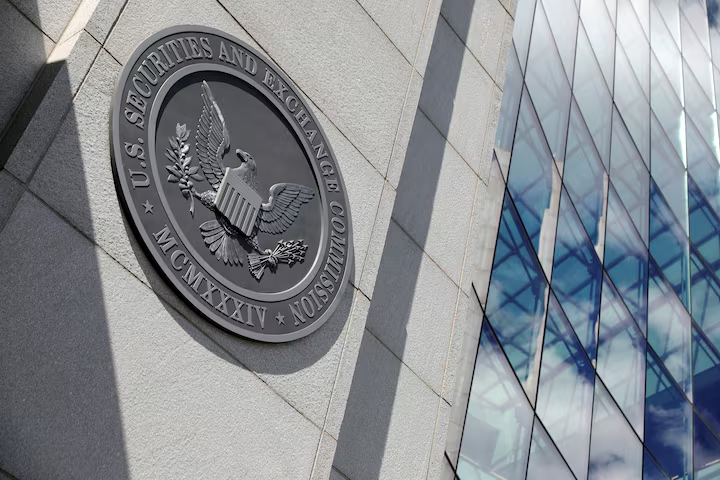
New York, Oct 30 (Reuters) – The U.S. Securities and Exchange Commission’s enforcement chief told Reuters on Friday that the agency is scrutinizing the corporate disclosures of artificial intelligence (AI) companies, amid growing investor concerns that an “AI bubble” may be fueled by circular trading.
A sell-off in shares of major technology companies occurred this week after they disclosed that they are burning through significant amounts of cash to drive AI expansion—even as interest rates remain high—raising questions about the sustainability of such AI-related spending.
David Woodcock, who assumed the role of Director of the Division of Enforcement at the U.S. Securities and Exchange Commission (SEC) in May, stated that while the agency has no desire to stifle technological innovation, its mandate is to ensure that issuers provide investors with full disclosure regarding potential risks.
“Our primary concern is whether material information is being disclosed truthfully, so that investors understand what they are investing in,” Woodcock said in an interview. “Enforcement is a necessary tool to ensure that this happens.”
He added that if such disclosures are not made, “then there will be enforcement actions.”
Woodcock also noted that artificial intelligence and super-intelligent systems have made large-scale fraud easier and less costly to execute, creating risks for an increasing number of people. He emphasized that brokerage firms and other entities must establish appropriate processes to protect retail investors and “take deliberate, well-considered action.”
Private Markets and Prediction Markets
Woodcock stated that the U.S. Securities and Exchange Commission (SEC) will continue to focus on issues within private markets, adding that the agency’s enforcement division—specifically its asset management unit—is paying close attention to conflicts of interest and valuation concerns.
“When there is a failure to provide accurate disclosures—whether regarding valuations or other matters—that is where enforcement comes in,” Woodcock said. “I think you will see an increase in enforcement activity in this area.”
Reuters previously reported that the SEC is investigating a private equity fund as part of the agency’s broader scrutiny of opaque markets.
Woodcock noted that the SEC also has a role in regulating prediction markets, which allow individuals to place bets on real-world events, including sports, government policy announcements, and elections.
Over the past two years, prediction markets—led by platforms such as Polymarket and Kalshi—have seen rapid growth and have begun to venture into the realm of U.S. stocks. Such stock-linked prediction markets generally fall under the jurisdiction of the SEC.
Woodcock stated that the agency’s enforcement staff are working with policy officials and the Commodity Futures Trading Commission—which has broad oversight of the swaps market—to monitor and regulate this burgeoning new market.
When asked whether it might pursue legal action against companies not registered with the agency, Woodcock indicated that the agency does not intend to regulate this nascent industry through enforcement actions.
“We want to be involved where appropriate,” he said, “but not in a way that stifles innovation.”