How OpenAI is transforming its coding tools into a “dot matrix”—creating an always-on personal assistant
This “always-on” AI personal assistant—which runs continuously in the background, even when you aren’t actively issuing commands—may well be the answer to how people will truly utilize deep-learning models this year. The startup Instinct has surged to overnight prominence, while Meta is leaning heavily into marketing its own assistant, Muse.
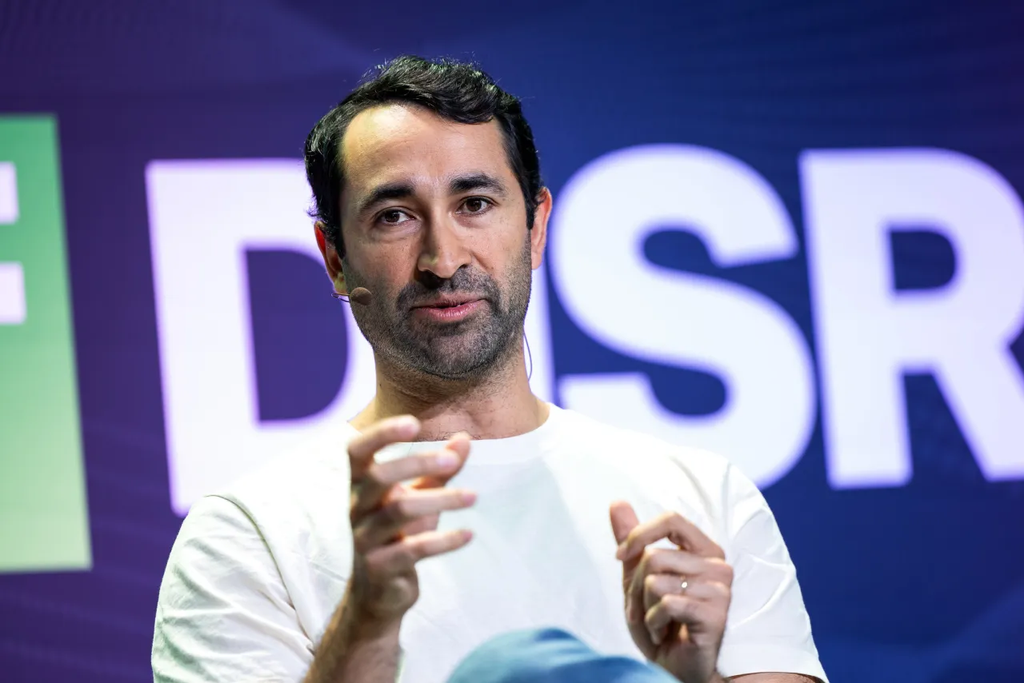
OpenAI is not to be outdone; at its developer event in late September, the company unveiled its own assistant, “dots.” Alexander Embiricos, who leads the enterprise product team at OpenAI, appeared at TechCrunch Disrupt this month to explain the origins of the product—starting with why so many companies seem to favor cute mascots as the public face for what are, in reality, massive, trillion-parameter matrix-multiplication engines.
“The development of AI assistants is undergoing a kind of convergent evolution,” Embiricos said, discussing the R&D process. “As we built the product, we realized that if we could frame it as a single, cohesive entity—one continuous conversation rather than a series of disjointed interactions—it would become far more intuitive.”
The assistant feature is available to users with a “Pro” (or higher) subscription to the ChatGPT desktop and mobile apps, with plans starting at $100 per month. Once connected to your calendar, email, computer, and other tools, the assistant works to help you get things done.
Embiricos noted that OpenAI’s “Codex” application—a coding tool released earlier this year—was already capable of performing many of the functions now found in “dots.” However, that required significantly more effort and guidance from the user. He recalled how delighted he was when his wife began leaving her computer on overnight just to keep an AI agent running.
“On the product team, I’m constantly thinking: how do we make this intuitive and useful for the user?” he told the audience at Disrupt. “Often, it’s not about adding new technology to the product; it’s about how you explain it to the user and how it makes them feel.”
From Chatbots and Coding Tools to Personal Assistants
To make this technology more intuitive and accessible, companies must repackage the capabilities of these models into forms that are easier for users to grasp. OpenAI has already begun this journey by evolving its AI-powered coding tools—originally designed for software engineers—into “ChatGPT Work.” Even the company name—which cleverly makes use of the negative space within the OpenAI logo—is intended to “create a sense that it could eventually be everywhere.” (When asked when he learned that fellow AI entrepreneur Elon Musk owned the .com domain, Embiricos replied, “I found out quite late.”)
The concept behind persistent agents is that they operate without needing user prompts. For OpenAI, this translates to higher token usage; for users, it means a more proactive assistant—one that, as Embiricos puts it, “thinks about what you need and how it can help you.”
In our testing, the assistant demonstrated a certain capacity for anticipation—often proving useful, though not yet perfect. It would flag calendar conflicts and upcoming deadlines, though not always with sufficient lead time.
“The first time it alerted me to a conflict—back when it was still in the early stages of development—it did so just three minutes before it was set to happen,” Embiricos recalled. “It was essentially saying, ‘Hey, this is about to happen. You’d better do something.’ I only had three minutes!”
Embiricos expects response times to improve over time, but emphasizes that a proactive approach is the key to the product’s success. “I heard an engineer at a drone delivery startup say, ‘We experienced a service outage. By the time I even noticed it, my drone had already detected the issue, analyzed the cause, and provided me with the information I needed to fix it.'”
Handing the Keys to Dots
As with most use cases for AI agents, there is an inherent tension between the personal information an AI model needs to function effectively and the amount of personal data a user ends up exposing to a software company. Muse, for instance, faced criticism for building profiles of a user’s friends and family. While the software uses this data to gauge, for example, what kind of restaurant a user might enjoy visiting with a specific friend, such information could also be immensely valuable to Meta’s advertising business. Does Dots collect similar data?
“Yes—we’ve built a feature called ‘proactive research’ into the Dots system,” says Embiricos. “At regular intervals, it reflects on what it knows about you, the conversations you’ve had, and the permissions you’ve granted it. It then asks itself, ‘What else could I do to be more helpful to you?’—and ultimately, it comes back with suggestions.”
It is often difficult to distinguish between the data requirements of an AI agent and those of its parent company. Hark, a startup developing its own AI personal assistant, explicitly states that it does not collect data to fuel an advertising business—unlike OpenAI or Meta.
OpenAI notes that Dots agents offer the same privacy controls as ChatGPT: users can opt out of model training (preventing OpenAI from using their conversations to improve its AI) and manage which resources on their computer the agent can access—and how. However, these controls lack granularity, and the application can sometimes be overly assertive; for example, it has refused to accept “read-only” access to cloud storage drives.
“I think what we really need to do is build extremely, extremely, extremely granular controls,” says Embiricos—though he points out that this is simply the flip side of the model’s intelligence and autonomy.
“In fact, we actually received some criticism for this right when we launched the product,” Embiricos adds. “We set the default behavior for our agents to be very conservative, requiring frequent authorization. I recall anticipating this kind of feedback at the time, but I figured, ‘That’s fine—we can make adjustments as we go.’”
Can personal AI agents scale?
Another critical question regarding AI agents is whether they can scale. They are certainly intriguing when used by a small number of people—take, for instance, the recurring stories about agents successfully securing hard-to-get restaurant reservations. However, businesses may neither welcome interactions with such agents nor possess the infrastructure to handle them. People, too, generally dislike dealing with them (a note to all: please stop having your AI agents pitch things to me!). Embiricos, for one, shares this sentiment; he explains that he still employs a human assistant because OpenAI’s corporate partners prefer to interact with a real person. He adds, “Personally, I have absolutely no intention of meeting with someone else’s agent.”
If the AI industry believes that autonomous agents represent our future, can we reach that point without placing an undue burden on the infrastructure that keeps today’s world running—from businesses and websites to payment networks?
“At OpenAI, we don’t always roll out new capabilities for agents to interact with the world at the fastest possible speed,” he says. “But when we do launch new features, we work closely with other players in the ecosystem. I can’t share too many details, but we are in deep discussions with several payment processors.”
Enabling AI assistants to make purchases by partnering with payment companies could be a highly lucrative innovation for OpenAI—but it’s a massive ask for consumers. Granting an assistant access to my email inbox is already a stretch; giving it access to my bank account is another matter entirely—at least for now.