Even Martin Scorsese uses artificial intelligence to create storyboards. Can this art form still survive?
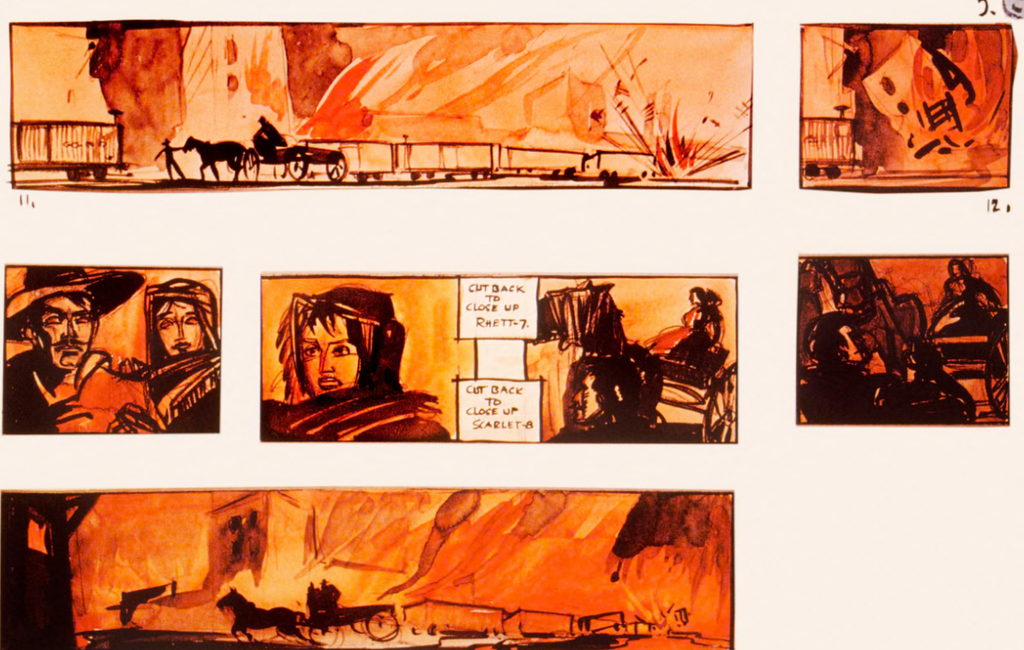
As Hollywood begins to adopt this technology, the professionals most immediately affected are the illustrators who sketch out a director’s initial vision—capturing images that might otherwise be lost.
The prospect of an AI-dominated film industry feels dystopian: stories and dialogue generated by large language models, with screen icons and uncanny, humanoid robots populating the frame. While this may be a vision of the future, the real-world impact of AI is already being felt behind the scenes, as top Hollywood filmmakers begin to embrace the technology. James Cameron—long an advocate for emerging filmmaking technologies—has joined an AI company, expressing interest in how AI might integrate with computer-generated imagery (CGI). Steven Soderbergh has utilized Meta-powered technology to create animations for his recent documentary on John Lennon. Even Christopher Nolan, while dismissing the idea that AI could replace humans as “nonsense,” acknowledges that it will yield some useful “imaging tools.”
Yet, it is storyboard artists whose roles may best signal the future—a profession now seemingly in the crosshairs of artificial intelligence. Storyboard artists are illustrators tasked with creating visual sequences; they annotate their drawings with notes and diagrams to map out scenes before filming begins. Storyboards serve to conceptualize the final look of a film, acting as a blueprint for directors to communicate their vision to actors and crew, and representing the crucial first step in translating a screenplay into a motion picture. Today, however, storyboarding appears on the verge of being supplanted by programs that generate illustrations from text prompts. Even a staunch traditionalist like Martin Scorsese has embraced this shift; this past June, he announced a partnership with an AI company, utilizing its text-to-image model to help storyboard his next film.
Typically, storyboards are created collaboratively by the director, storyboard artists, and other crew members responsible for the film’s visual storytelling—such as cinematographers, editors, production designers, and stunt coordinators. “I find this collaborative approach to artistic creation incredibly rewarding,” says British storyboard artist Alex Clark, whose recent work includes Bong Joon-ho’s sci-fi comedy Mickey 17, the adventure-romance The Canyon, and Louis Leterrier’s thriller The Last House. “It requires everyone to sit down and discuss their ideas. You might act things out together, create sound effects, or read through the dialogue. A creative bond forms between you all.”
For Clark, the process of creating storyboards is just as significant as the final film itself. “People often mistake storyboarding for simply drawing pretty pictures. But it’s much more than that—it’s about connecting with the director’s vision and conceiving the best way to tell the story of a scene,” he explains. Denis Villeneuve, director of Dune, described his long-time collaborator—artist Sam Hudecki—in similar terms, calling him “an extension of my brain.” For Villeneuve, storyboarding is a “new form of writing”: while a screenplay provides the text, storyboards represent the first step in crafting a “cinematic language.” He views it as “a way of dreaming,” allowing the nascent form of a film to take shape on paper.
Clark believes that one must strike a balance between “capturing the essence of a scene” and conceptualizing the mechanics of the camera work. “The way you mark the page—conveying shapes, tones, composition, character blocking, and so on—forces you to think deeply about how all these distinct details will influence the scene. It gives you a much profounder understanding of how the scene functions.” Clark’s work underscores the fact that storyboarding is merely one link in an ongoing collaborative process—one that spans pre-production, the actual shoot, and post-production. “Sometimes I try to keep my drawings somewhat open-ended, leaving room for others to build upon them—whether through an actor’s performance, set design, lighting choices, or nuanced camera movement. I like to leave space for happy accidents.”
For researchers and film enthusiasts, the art of storyboarding offers a glimpse into the creative journey behind a film, including fascinating shifts in narrative direction. “Storyboard art reveals the evolution of creative concepts,” says Ferdinando Cocco, a film lecturer at Abertay University in Dundee. He cites Disney’s 1991 film Beauty and the Beast as an example: production began in the late 1980s, and the initial storyboards featured a Rococo-inspired aesthetic—a nod to the fairy tale’s origins—in which Gaston was envisioned as an 18th-century French aristocrat wearing a wig, rather than the rugged, square-jawed hunter with a bloated face who would later come to embody a certain brand of modern masculinity.
As a filmmaking technique, storyboarding was first widely used by Disney animators in the 1930s, playing a pivotal role in their production process—a fact evidenced by exhibitions of concept art and storyboards, as well as side-by-side comparison videos released online by Disney. (Last year, Disney also announced a $1 billion investment in OpenAI’s video-generation tool, Sora.)
Storyboarding was soon adopted by live-action filmmakers, with a history dating back at least as far as the 1939 classic Gone with the Wind. Since then, many directors have produced exquisite and compelling storyboards. Alfred Hitchcock’s storyboards were exceptionally detailed, giving rise to some of the most iconic imagery in cinema—such as the shower scene in Psycho, which was sketched out by his long-time collaborator Saul Bass (who also designed many classic film posters of that era). Earlier, Hitchcock had even collaborated with Salvador Dalí to create surrealist visuals for a dream sequence in his 1945 film Spellbound.
Other directors, including Akira Kurosawa and Ridley Scott—whose storyboards are famously known as “Ridleygrams”—have created their own storyboards. Some of Bong Joon-ho’s hand-drawn sketches are currently on display at the Academy Museum in Los Angeles, and his storyboards for Parasite have even been published as a graphic novel. “Whenever I go to the set without a storyboard, I feel like I’m standing in the middle of Grand Central Station in my underwear,” Bong wrote in the book’s foreword—though he also encourages readers to view the discrepancies between the storyboards and the final film as “exciting moments filled with both fear and improvisation.”
The interest of cinephiles in behind-the-scenes material has given rise to a market for books dedicated to storyboards. Last year, an exhibition in Milan showcased the art of the storyboard, featuring works ranging from those of arthouse masters like Ingmar Bergman and Federico Fellini, to contemporary artists such as Isaac Julien and Carrie Mae Weems, and even Hollywood icons like Martin Scorsese.
Creating compelling imagery serves a practical purpose as well; storyboards are often displayed on set to keep the crew informed about the day’s shooting schedule. “I feel a responsibility to create work that inspires and engages everyone,” says Clark. “Demonstrating a high level of artistry and dedication at this stage sets a tone for the entire production, encouraging people to value the craft involved.”
All is not lost. Cocco observes a growing return to analog practices and suggests that artificial intelligence could be employed in a way that enhances, rather than diminishes, the creative process. “Perhaps the very challenges that AI claims to overcome are, in fact, the whole point of the creative endeavor,” Cocco notes. “Engaging with others forces an artist’s vision to expand in ways that could never have been anticipated.”
Meanwhile, Clark predicts that as AI becomes increasingly prevalent in the film industry, there will be a greater appreciation for cinema imbued with a human touch. “Ultimately, I believe most successful films resonate because they touch the human heart. One of the great strengths of hand-drawn storyboards is that they allow you to sense that authentic human quality directly on the page.”